Climate in Action: Students Negotiate a Cooler Planet

Climate in Action: Students Negotiate a Cooler Planet

30.04.2025


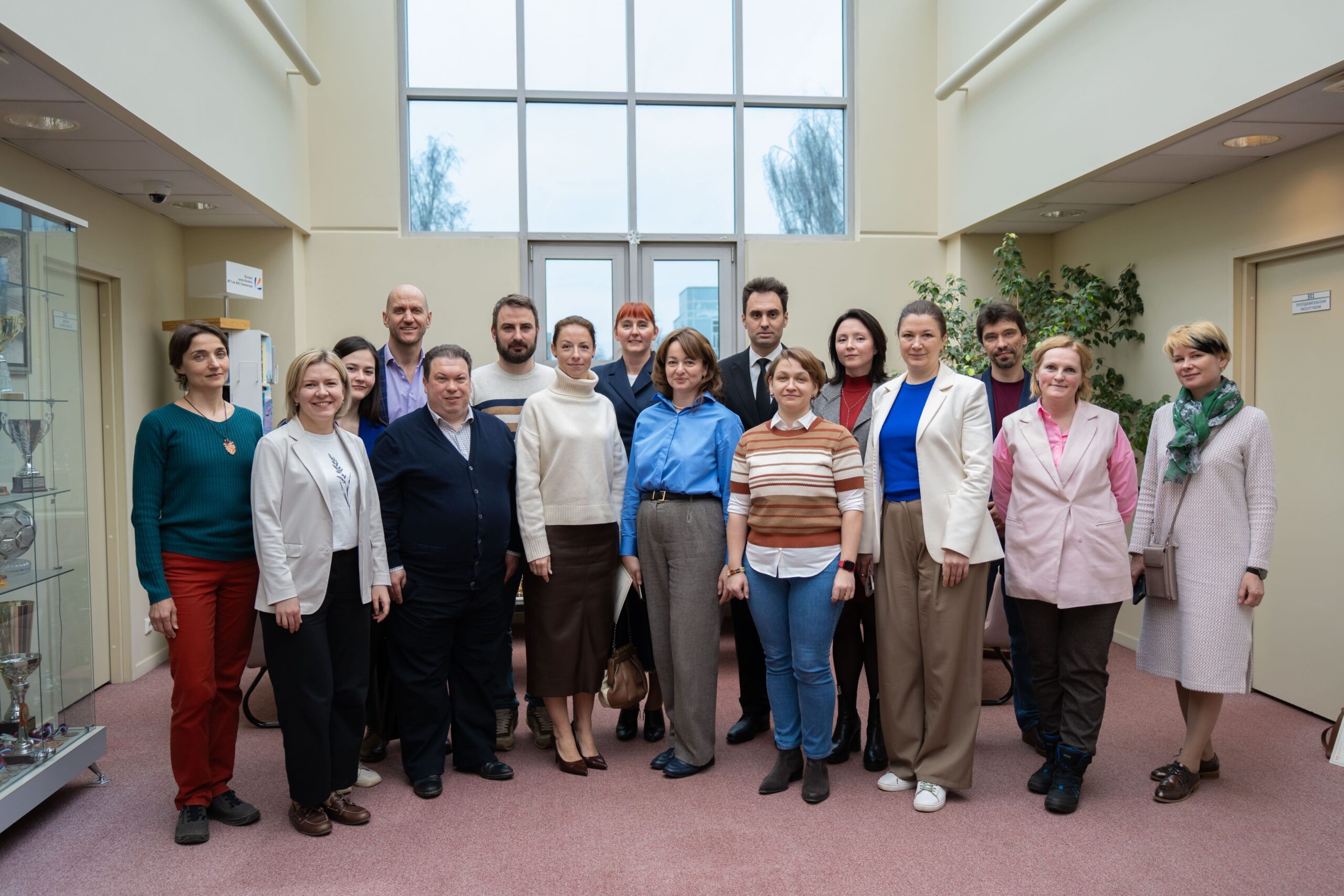
On April 30th, Lomonosov Moscow State University (MSU) Business School, in collaboration with Turkey’s Yeditepe University, hosted an International Climate Workshop. Using the En-ROADS simulator, participants explored how human actions can influence climate change.

The En-ROADS climate change simulator is a sophisticated interactive model jointly developed by MIT, Climate Interactive, and Ventana Systems. This powerful tool allows users to explore the complex interplay of various policy decisions and their long-term impact on global temperatures and ecological health.

The workshop brought together a diverse and highly interdisciplinary group of students. Participants gathered from various MSU faculties, including MSUBS, Faculty of Geography, Soil Science Faculty, Faculty of Mechanics and Mathematics, Faculty of Computational Mathematics and Cybernetics, the Advanced School of Public Administration, as well as from other institutions —such as MGIMO and the Dokuchaev Soil Science Institute. Thanks to MSUBS’ parther Yeditepe University in Istanbul, Turkey, whose students participated online, the event got its international flavour.

Each team represented a distinct sector of society, ranging from representatives of the agricultural and industrial sectors to environmental activists and trade organizations. Remarkably, one of the teams relied entirely on real-time AI-generated recommendations fed into the En-ROADS simulator. Each group proposed its own set of measures to reduce CO₂ emissions and tested their effectiveness against global warming using the interactive model.

The workshop was moderated by Evgenia A. Shvets, MSUBS Associate Professor at the Department of Economics and an expert in green economy and sustainable development. Yeditepe University’s coordination was led by Professor Bariş  Baykan and Professor Tomris Aydoǧan.

After a round of discussions, teams from MSU and Yeditepe University developed a coordinated action plan that successfully limited global temperature rise to +2°C by 2100. The use of the En-ROADS simulator allowed for real-time feedback, demonstrating the efficiency of proposals and enabling students to iterate their strategies accordingly. The results underscored that only coordinated efforts—combining technological innovation, economic incentives, and policy changes—can deliver lasting effects. Participants emphasized the pivotal role of businesses in transitioning to a green economy, a key takeaway for MSUBS and Yeditepe students as future leaders in business and entrepreneurship.

MGU
MGU
MGU
MGU
MGU
MGU
MGU
MGU
MGU
MGU
MGU
MGU
MGU
MGU
MGU

Urban Fashion and Conscious Consumerism: Lecture of MSUBS faculty Tatiana Zadirako

Climate in Action: Students Negotiate a Cooler Planet

30.04.2025


On April 30th, Lomonosov Moscow State University (MSU) Business School, in collaboration with Turkey’s Yeditepe University, hosted an International Climate Workshop. Using the En-ROADS simulator, participants explored how human actions can influence climate change.

The En-ROADS climate change simulator is a sophisticated interactive model jointly developed by MIT, Climate Interactive, and Ventana Systems. This powerful tool allows users to explore the complex interplay of various policy decisions and their long-term impact on global temperatures and ecological health.

The workshop brought together a diverse and highly interdisciplinary group of students. Participants gathered from various MSU faculties, including MSUBS, Faculty of Geography, Soil Science Faculty, Faculty of Mechanics and Mathematics, Faculty of Computational Mathematics and Cybernetics, the Advanced School of Public Administration, as well as from other institutions —such as MGIMO and the Dokuchaev Soil Science Institute. Thanks to MSUBS’ parther Yeditepe University in Istanbul, Turkey, whose students participated online, the event got its international flavour.

Each team represented a distinct sector of society, ranging from representatives of the agricultural and industrial sectors to environmental activists and trade organizations. Remarkably, one of the teams relied entirely on real-time AI-generated recommendations fed into the En-ROADS simulator. Each group proposed its own set of measures to reduce CO₂ emissions and tested their effectiveness against global warming using the interactive model.

The workshop was moderated by Evgenia A. Shvets, MSUBS Associate Professor at the Department of Economics and an expert in green economy and sustainable development. Yeditepe University’s coordination was led by Professor Bariş  Baykan and Professor Tomris Aydoǧan.

After a round of discussions, teams from MSU and Yeditepe University developed a coordinated action plan that successfully limited global temperature rise to +2°C by 2100. The use of the En-ROADS simulator allowed for real-time feedback, demonstrating the efficiency of proposals and enabling students to iterate their strategies accordingly. The results underscored that only coordinated efforts—combining technological innovation, economic incentives, and policy changes—can deliver lasting effects. Participants emphasized the pivotal role of businesses in transitioning to a green economy, a key takeaway for MSUBS and Yeditepe students as future leaders in business and entrepreneurship.

MGU
MGU
MGU
MGU
MGU
MGU
MGU
MGU
MGU
MGU
MGU
MGU
MGU
MGU
MGU

Delegation of MSUBS Participates in APAIE International Conference in India

Climate in Action: Students Negotiate a Cooler Planet

30.04.2025


On April 30th, Lomonosov Moscow State University (MSU) Business School, in collaboration with Turkey’s Yeditepe University, hosted an International Climate Workshop. Using the En-ROADS simulator, participants explored how human actions can influence climate change.

The En-ROADS climate change simulator is a sophisticated interactive model jointly developed by MIT, Climate Interactive, and Ventana Systems. This powerful tool allows users to explore the complex interplay of various policy decisions and their long-term impact on global temperatures and ecological health.

The workshop brought together a diverse and highly interdisciplinary group of students. Participants gathered from various MSU faculties, including MSUBS, Faculty of Geography, Soil Science Faculty, Faculty of Mechanics and Mathematics, Faculty of Computational Mathematics and Cybernetics, the Advanced School of Public Administration, as well as from other institutions —such as MGIMO and the Dokuchaev Soil Science Institute. Thanks to MSUBS’ parther Yeditepe University in Istanbul, Turkey, whose students participated online, the event got its international flavour.

Each team represented a distinct sector of society, ranging from representatives of the agricultural and industrial sectors to environmental activists and trade organizations. Remarkably, one of the teams relied entirely on real-time AI-generated recommendations fed into the En-ROADS simulator. Each group proposed its own set of measures to reduce CO₂ emissions and tested their effectiveness against global warming using the interactive model.

The workshop was moderated by Evgenia A. Shvets, MSUBS Associate Professor at the Department of Economics and an expert in green economy and sustainable development. Yeditepe University’s coordination was led by Professor Bariş  Baykan and Professor Tomris Aydoǧan.

After a round of discussions, teams from MSU and Yeditepe University developed a coordinated action plan that successfully limited global temperature rise to +2°C by 2100. The use of the En-ROADS simulator allowed for real-time feedback, demonstrating the efficiency of proposals and enabling students to iterate their strategies accordingly. The results underscored that only coordinated efforts—combining technological innovation, economic incentives, and policy changes—can deliver lasting effects. Participants emphasized the pivotal role of businesses in transitioning to a green economy, a key takeaway for MSUBS and Yeditepe students as future leaders in business and entrepreneurship.

MGU
MGU
MGU
MGU
MGU
MGU
MGU
MGU
MGU
MGU
MGU
MGU
MGU
MGU
MGU

From Textbooks to Tuk-Tuks: Student Spices Up Final Paper with Indian Adventure

Climate in Action: Students Negotiate a Cooler Planet

30.04.2025


On April 30th, Lomonosov Moscow State University (MSU) Business School, in collaboration with Turkey’s Yeditepe University, hosted an International Climate Workshop. Using the En-ROADS simulator, participants explored how human actions can influence climate change.

The En-ROADS climate change simulator is a sophisticated interactive model jointly developed by MIT, Climate Interactive, and Ventana Systems. This powerful tool allows users to explore the complex interplay of various policy decisions and their long-term impact on global temperatures and ecological health.

The workshop brought together a diverse and highly interdisciplinary group of students. Participants gathered from various MSU faculties, including MSUBS, Faculty of Geography, Soil Science Faculty, Faculty of Mechanics and Mathematics, Faculty of Computational Mathematics and Cybernetics, the Advanced School of Public Administration, as well as from other institutions —such as MGIMO and the Dokuchaev Soil Science Institute. Thanks to MSUBS’ parther Yeditepe University in Istanbul, Turkey, whose students participated online, the event got its international flavour.

Each team represented a distinct sector of society, ranging from representatives of the agricultural and industrial sectors to environmental activists and trade organizations. Remarkably, one of the teams relied entirely on real-time AI-generated recommendations fed into the En-ROADS simulator. Each group proposed its own set of measures to reduce CO₂ emissions and tested their effectiveness against global warming using the interactive model.

The workshop was moderated by Evgenia A. Shvets, MSUBS Associate Professor at the Department of Economics and an expert in green economy and sustainable development. Yeditepe University’s coordination was led by Professor Bariş  Baykan and Professor Tomris Aydoǧan.

After a round of discussions, teams from MSU and Yeditepe University developed a coordinated action plan that successfully limited global temperature rise to +2°C by 2100. The use of the En-ROADS simulator allowed for real-time feedback, demonstrating the efficiency of proposals and enabling students to iterate their strategies accordingly. The results underscored that only coordinated efforts—combining technological innovation, economic incentives, and policy changes—can deliver lasting effects. Participants emphasized the pivotal role of businesses in transitioning to a green economy, a key takeaway for MSUBS and Yeditepe students as future leaders in business and entrepreneurship.

MGU
MGU
MGU
MGU
MGU
MGU
MGU
MGU
MGU
MGU
MGU
MGU
MGU
MGU
MGU

MSUBS Hosts Foreign Delegations from the Universties of Brazil and China

MSUBS Hosts Foreign Delegations from the Universties of Brazil and China

25.01.2025


Lomonosov MSUBS recently welcomed distinguished foreign delegations from Brazil and China, marking a significant step in strengthening international academic and business collaborations. The visit, aimed at fostering educational partnerships, highlighted the growing global interest in Russia’s leading business programs.

The Brazilian delegation explored potential cooperation in management education, student exchanges, and joint research initiatives. UFRJ, Brazil’s biggest public university, has a cutting-edge tech park which was designed to foster linkages between academia and industry. During the meeting, participants explored new partnership avenues that would allow students to pursue academic studies at a partner university while also gaining practical experience through corporate internships. Given Brazil’s expanding economy and Russia’s expertise in business education, both sides emphasized the mutual benefits of such partnerships in nurturing future business leaders.

The Chinese delegation engaged in discussions on enhancing Sino-Russian business education ties. As China remains a key strategic partner for Russia, the talks focused on creating joint training programs, faculty and student exchanges, COIL projects and cross-cultural communication. MSUBS highlighted the school’s strong connections with Chinese institutions, including existing partnerships with top universities. The parties also agreed to expand executive training programs, including Doing Business with China and Doing Business with Russia, tailored for managers.

The successful meetings with Brazilian and Chinese delegates are expected to lead to formal agreements in the coming months. Potential initiatives include joint conferences, research projects, and student exchange programs.

MGU MGU

Russian-Indian cross-cultural dialogue: an online conference «Innovate & Integrate: Building Bridges Across Different Business Cultures»

Climate in Action: Students Negotiate a Cooler Planet

30.04.2025


On April 30th, Lomonosov Moscow State University (MSU) Business School, in collaboration with Turkey’s Yeditepe University, hosted an International Climate Workshop. Using the En-ROADS simulator, participants explored how human actions can influence climate change.

The En-ROADS climate change simulator is a sophisticated interactive model jointly developed by MIT, Climate Interactive, and Ventana Systems. This powerful tool allows users to explore the complex interplay of various policy decisions and their long-term impact on global temperatures and ecological health.

The workshop brought together a diverse and highly interdisciplinary group of students. Participants gathered from various MSU faculties, including MSUBS, Faculty of Geography, Soil Science Faculty, Faculty of Mechanics and Mathematics, Faculty of Computational Mathematics and Cybernetics, the Advanced School of Public Administration, as well as from other institutions —such as MGIMO and the Dokuchaev Soil Science Institute. Thanks to MSUBS’ parther Yeditepe University in Istanbul, Turkey, whose students participated online, the event got its international flavour.

Each team represented a distinct sector of society, ranging from representatives of the agricultural and industrial sectors to environmental activists and trade organizations. Remarkably, one of the teams relied entirely on real-time AI-generated recommendations fed into the En-ROADS simulator. Each group proposed its own set of measures to reduce CO₂ emissions and tested their effectiveness against global warming using the interactive model.

The workshop was moderated by Evgenia A. Shvets, MSUBS Associate Professor at the Department of Economics and an expert in green economy and sustainable development. Yeditepe University’s coordination was led by Professor Bariş  Baykan and Professor Tomris Aydoǧan.

After a round of discussions, teams from MSU and Yeditepe University developed a coordinated action plan that successfully limited global temperature rise to +2°C by 2100. The use of the En-ROADS simulator allowed for real-time feedback, demonstrating the efficiency of proposals and enabling students to iterate their strategies accordingly. The results underscored that only coordinated efforts—combining technological innovation, economic incentives, and policy changes—can deliver lasting effects. Participants emphasized the pivotal role of businesses in transitioning to a green economy, a key takeaway for MSUBS and Yeditepe students as future leaders in business and entrepreneurship.

MGU
MGU
MGU
MGU
MGU
MGU
MGU
MGU
MGU
MGU
MGU
MGU
MGU
MGU
MGU

MSUBS sophomores: Experiencing art to learn and grow

Climate in Action: Students Negotiate a Cooler Planet

30.04.2025


On April 30th, Lomonosov Moscow State University (MSU) Business School, in collaboration with Turkey’s Yeditepe University, hosted an International Climate Workshop. Using the En-ROADS simulator, participants explored how human actions can influence climate change.

The En-ROADS climate change simulator is a sophisticated interactive model jointly developed by MIT, Climate Interactive, and Ventana Systems. This powerful tool allows users to explore the complex interplay of various policy decisions and their long-term impact on global temperatures and ecological health.

The workshop brought together a diverse and highly interdisciplinary group of students. Participants gathered from various MSU faculties, including MSUBS, Faculty of Geography, Soil Science Faculty, Faculty of Mechanics and Mathematics, Faculty of Computational Mathematics and Cybernetics, the Advanced School of Public Administration, as well as from other institutions —such as MGIMO and the Dokuchaev Soil Science Institute. Thanks to MSUBS’ parther Yeditepe University in Istanbul, Turkey, whose students participated online, the event got its international flavour.

Each team represented a distinct sector of society, ranging from representatives of the agricultural and industrial sectors to environmental activists and trade organizations. Remarkably, one of the teams relied entirely on real-time AI-generated recommendations fed into the En-ROADS simulator. Each group proposed its own set of measures to reduce CO₂ emissions and tested their effectiveness against global warming using the interactive model.

The workshop was moderated by Evgenia A. Shvets, MSUBS Associate Professor at the Department of Economics and an expert in green economy and sustainable development. Yeditepe University’s coordination was led by Professor Bariş  Baykan and Professor Tomris Aydoǧan.

After a round of discussions, teams from MSU and Yeditepe University developed a coordinated action plan that successfully limited global temperature rise to +2°C by 2100. The use of the En-ROADS simulator allowed for real-time feedback, demonstrating the efficiency of proposals and enabling students to iterate their strategies accordingly. The results underscored that only coordinated efforts—combining technological innovation, economic incentives, and policy changes—can deliver lasting effects. Participants emphasized the pivotal role of businesses in transitioning to a green economy, a key takeaway for MSUBS and Yeditepe students as future leaders in business and entrepreneurship.

TED Talk Competition

Climate in Action: Students Negotiate a Cooler Planet

30.04.2025

For freshmen students at MSUBS, every academic year ends with a public speech contest in format of TED Talks. Students go through heats in their respective groups and the best compete in the finals at the end of the semester. This year, due to unexpected circumstances, the final round took place online. However, it did not stop the finalists from delivering powerful and thought-provoking messages.


The topic for this year was rather broad, We Can Make It Happen, and the speeches ranged in content from sustainability and inclusion to personal values and priorities.


This year winners are (in order of appearance during the contest):

  • Dvoynova Valeria, Let us make education available to people with disability
  • Karpenko Angelina, Histerical strength: our hidden superpower?
  • Kosilov Vadim, Foul language is unacceptable for the future elite


  • Pisklenova Polina, Let us welcome and support people with learning disorders
  • Teryaeva Anna, So, you have a great idea: what’s next?
  • Trutneva Maria, Big dramatic changes or small steps to a better life?
  • Shmakova Svetlana, How students can improve the education system and enjoy education


The runners-up are:

  • Britik Vladimir, Sustainable and energy-efficient lifestyle is real
  • Zakharyaev Enrique, How can we make our business school accessible for the disabled?


  • Kulikov Vyacheslav, Your body speaks – do you know what it is saying?
  • Pak Elizaveta, Want to be an ethical consumer? Avoid fast fashion!
  • Polikarpov Demid, How can we learn English effectively through special techniques?


All of the finalists demonstrated great command of English, creative thinking, and impressed the judges with public speaking skills. We thank all the finalists for very spectacular and inspiring performances and congratulate them on the job well done.

Online guest lecture of Andrey Belov, Head of international communications at ERG, for students of the MSUBS Regional Economy class

Climate in Action: Students Negotiate a Cooler Planet

30.04.2025

For freshmen students at MSUBS, every academic year ends with a public speech contest in format of TED Talks. Students go through heats in their respective groups and the best compete in the finals at the end of the semester. This year, due to unexpected circumstances, the final round took place online. However, it did not stop the finalists from delivering powerful and thought-provoking messages.


The topic for this year was rather broad, We Can Make It Happen, and the speeches ranged in content from sustainability and inclusion to personal values and priorities.


This year winners are (in order of appearance during the contest):

  • Dvoynova Valeria, Let us make education available to people with disability
  • Karpenko Angelina, Histerical strength: our hidden superpower?
  • Kosilov Vadim, Foul language is unacceptable for the future elite


  • Pisklenova Polina, Let us welcome and support people with learning disorders
  • Teryaeva Anna, So, you have a great idea: what’s next?
  • Trutneva Maria, Big dramatic changes or small steps to a better life?
  • Shmakova Svetlana, How students can improve the education system and enjoy education


The runners-up are:

  • Britik Vladimir, Sustainable and energy-efficient lifestyle is real
  • Zakharyaev Enrique, How can we make our business school accessible for the disabled?


  • Kulikov Vyacheslav, Your body speaks – do you know what it is saying?
  • Pak Elizaveta, Want to be an ethical consumer? Avoid fast fashion!
  • Polikarpov Demid, How can we learn English effectively through special techniques?


All of the finalists demonstrated great command of English, creative thinking, and impressed the judges with public speaking skills. We thank all the finalists for very spectacular and inspiring performances and congratulate them on the job well done.

Traditional English Tea Party at MSUBS

Climate in Action: Students Negotiate a Cooler Planet

30.04.2025

For freshmen students at MSUBS, every academic year ends with a public speech contest in format of TED Talks. Students go through heats in their respective groups and the best compete in the finals at the end of the semester. This year, due to unexpected circumstances, the final round took place online. However, it did not stop the finalists from delivering powerful and thought-provoking messages.


The topic for this year was rather broad, We Can Make It Happen, and the speeches ranged in content from sustainability and inclusion to personal values and priorities.


This year winners are (in order of appearance during the contest):

  • Dvoynova Valeria, Let us make education available to people with disability
  • Karpenko Angelina, Histerical strength: our hidden superpower?
  • Kosilov Vadim, Foul language is unacceptable for the future elite


  • Pisklenova Polina, Let us welcome and support people with learning disorders
  • Teryaeva Anna, So, you have a great idea: what’s next?
  • Trutneva Maria, Big dramatic changes or small steps to a better life?
  • Shmakova Svetlana, How students can improve the education system and enjoy education


The runners-up are:

  • Britik Vladimir, Sustainable and energy-efficient lifestyle is real
  • Zakharyaev Enrique, How can we make our business school accessible for the disabled?


  • Kulikov Vyacheslav, Your body speaks – do you know what it is saying?
  • Pak Elizaveta, Want to be an ethical consumer? Avoid fast fashion!
  • Polikarpov Demid, How can we learn English effectively through special techniques?


All of the finalists demonstrated great command of English, creative thinking, and impressed the judges with public speaking skills. We thank all the finalists for very spectacular and inspiring performances and congratulate them on the job well done.

MGU
MGU
MGU
MGU
MGU
MGU
MGU
MGU