
Lomonosov Business School Took Part in ABEST21 Annual Conference in Kyoto
The Annual Conference of the ABEST21 International Association was held at the Kyoto International Conference Center in Japan on May 19.
ABEST21 brings together leading business schools from universities across Japan, China, Malaysia, Indonesia,Thailand, Russia, and other countries. The Association’s mission is to advance the quality of business education worldwide by fostering collaboration and strengthening partnerships among its member institutions.
The conference program consisted of two sessions. The opening session began with a formal welcome address by Professor Fumio Ito, President of ABEST21 and Professor Emeritus. Participants then reviewed and discussed the Association’s annual report, strategic plans, and budget for the coming year. Lomonosov MSU Business School Dean (MSUBS) Professor O.S.Vikhanskiy contributed to the discussion with a keynote presentation addressing future developments and prospects for the Association.
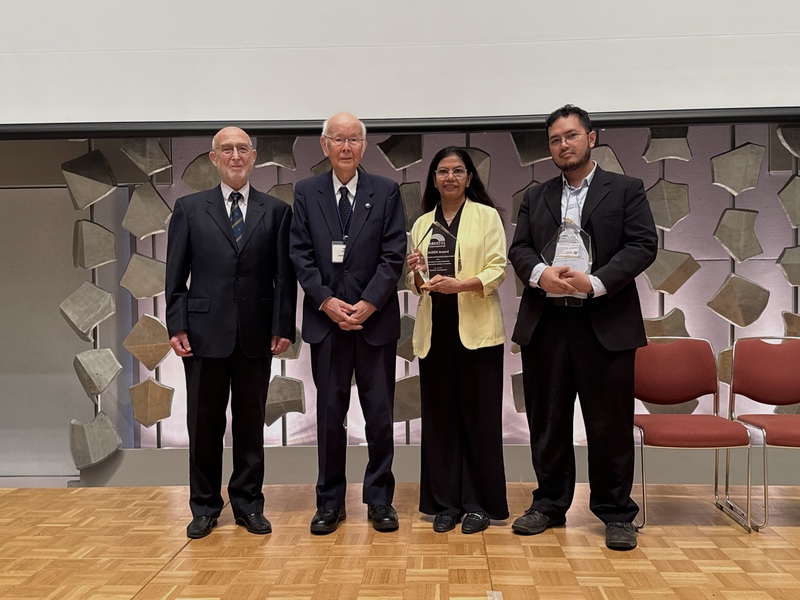
The session concluded with the presentation of ABEST21 accreditation certificates to newly accredited member schools, followed by the 2026 KAIZEN Awards ceremony. As Vice President of ABEST21, Professor Vikhanskiy presented the awards to this year’s recipients.
The second session featured an international symposium entitled Human Resource Development and the Design of Competitive Educational Programs for the Global South. The symposium built upon discussions initiated during the international symposium held in May 2025, which was organized in cooperation with Japan’s Ministry of Education, Culture, Sports, Science and Technology (MEXT), the United Nations University, and the Japan International Cooperation Agency (JICA).
The participation of MSUBS in the ABEST21 Annual Conference reflects the School’s strong international standing and its continued commitment to expanding global partnerships in business education, particularly with institutions across the Asia-Pacific region.
Alongside the conference, several meetings were organized to deepen MSUBS cooperation with institutions in Thailand, Malaysia, Indonesia and Japan.


